InBev Intelligent Storage empowers new development of AI computing power industry
As a key infrastructure in the digital economy era, data centers are undergoing technological upgrades and green transformation. In the current era of rapid iteration of artificial intelligence technology, traditional Internet data centers (IDCs) are accelerating their evolution into artificial intelligence data centers (AIDCs). According to Puhua Youce's analysis, the development of data centers has gone through the following four main stages:
1. Network-centric stage (before 2000) : At this stage, the data center serves as the main carrier of network traffic to mainly meet the needs of enterprise informatization and basic data storage. The initial growth of enterprise informatization, network and storage needs is its main driving factor;
2. IT center stage (2000-2010) : At this stage, the data center service content is diversified, covering value-added services such as data storage, backup, and security. The popularization of the Internet and the complexity of enterprise IT systems are its main driving factors;
3. Cloud center stage (2010-2020) : Large-scale data centers have become the mainstream form of the industry, and the construction entities present a diversified pattern such as cloud service providers and telecom operators. The maturity of cloud technology and the explosion of cloud service demand are the main driving factors at this stage;
4. Computing center stage (2020 to present) : The demand for AI computing power has increased significantly during this stage. AIDC has gradually become a new form of data center development. AI computing power center service providers have a dominant position in this stage. The increase in the widespread use of artificial intelligence technology in computing power-intensive tasks is the main driving factor in this stage.

Source: "AIDC White Paper" Huawei, Zeping Macro
The core differences between AIDC and IDC
AIDC is AI Data Center or AI-Dedicated Data Center, often called " Intelligent Computing Center "(Intelligent Computing Center) can be regarded as focusing on artificial intelligence training" Computing power factory ". Its core goal is to provide powerful computing capabilities specifically for AI, focusing on training and running various large AI models, and has extremely high power requirements for GPU clusters. In contrast, traditional IDC is more " information warehouse ” role, the core function is the storage, management and distribution of data. It is like a huge modern library or warehouse, ensuring that massive data (such as documents, videos, user information, transaction records) are stored safely, reliably and efficiently, and can be quickly retrieved and transmitted when needed.
In terms of power characteristics, the two are significantly different. The energy consumption of IDC is relatively " Smooth "Electricity is mainly consumed in IT equipment (servers, storage, networks) and cooling systems (air conditioners). Although the total power consumption of some large IDCs is high, the load fluctuations are relatively small and the power demand curve is relatively flat. And AIDC is " Energy-consuming beast ”, and its energy consumption is “ Explosive "and" high density ” Yes, the power consumption of an AI server cluster may be dozens or even hundreds of times that of a traditional server. It is AIDC's high dependence on electricity and extremely high energy consumption that makes its integration with energy storage technology an inevitable trend and core competitiveness.
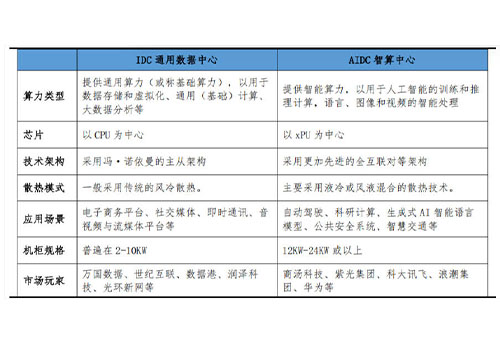
Source: "AI DC White Paper" Huawei,
"2024 Data Center Industry Investment and Value Insights", Zeping Macro
From the perspective of industry operating rules, AIDC’s computing power load shows significant “ Tidal characteristics ”, this feature is deeply bound to the high-frequency demand scenarios of people’s livelihood. Meituan Research Institute data shows that the peak daily orders for food delivery are concentrated in the two periods of 11:30-13:00 in the afternoon and 17:30-19:30 in the evening, and the peak order volume can reach 3.2 times that of the off-peak period; Didi Chuxing’s big data shows that the number of taxi requests during the morning and evening commuting periods (7:00-9:00, 17:00-19:00) is 2.8 times higher than that during non-peak periods. Affected by such demand fluctuations, Load power consumption may fluctuate by more than 80% of rated power consumption , that is, the load power consumption of the intelligent computing center may vary from 10% Rapidly mutate to 80% , Even 100% , and there will be obvious load peaks 3-4 times in a single day, which is a typical " Multi-frequency dynamic load " scene. (Data sources: "White Paper on the Construction Guidelines for Computing Power Factories", "White Paper on the Development of Intelligent Computing Centers", etc.)
In contrast, traditional IDC mainly carries static services such as web page storage and email services. The load fluctuation range is stable at around 5%-10% for a long time, and the overall operating status is " low volatility , High stability "Characteristics. This stable load characteristic makes traditional IDC unable to pass " Peak and valley arbitrage ” (that is, using the peak and valley differences in electricity prices to achieve cost optimization) to achieve cost optimization. AIDC is exactly the opposite. It can pass " Peak and valley arbitrage "In order to increase the load to absorb low-priced electricity during low electricity price periods and reduce the load during peak periods to reduce the consumption of high-priced electricity, we can also rely on SenseTime Lingang Intelligent Computing Center" 15 minute forecast + 5 minute correction "Algorithm scheduling, while ensuring the core computing power demand, actively suppresses the peak power consumption and reduces the maximum demand value within the cycle, thereby significantly reducing the demand for electricity, forming a " Peak and valley arbitrage + demand optimization ” double cost advantage.
The demand problem in the computing power center is essentially the contradictory product of the interaction between high-power-density loads and the power grid - the instantaneous fluctuations of core loads such as AI training clusters can reach tens of megawatts. When combined with the periodic consumption of auxiliary systems such as air conditioners, it is easy to form peak demand that far exceeds the average load, directly pushing up demand electricity bills and threatening the stability of the power grid. Energy storage system passes " "Cutting peaks and filling valleys" It can physically suppress load fluctuations, but only by forming a three-in-one collaborative mechanism with algorithmic decision-making and EMS (energy management system) scheduling can demand control be precise and economical. The essence of this process is " Information - Physics - Energy " Deep coupling of the system. From a technical perspective, this collaboration is a typical paradigm of computing power empowering energy management - algorithms convert computing power into decision-making capabilities, and EMS converts decision-making into physical control. The organic combination of the two upgrades energy storage from passive backup equipment to an active demand management center. With " Counting from east to west " As the project progresses, this model will become the core support for the collaborative operation of the computing center and the new energy base. While reducing its own demand costs, it will also provide millions of kilowatts of flexible adjustment resources for the new power system.
Global energy and technology industry spending has increased significantly, accelerating AIDC deployment
AIDC has become the core infrastructure supporting large model training and intelligent reasoning, and its unique operating characteristics are forming a deeply bound symbiotic relationship with the energy storage industry. This kind of " Computing power demand drives energy revolution , Energy innovation feeds back the development of computing power "The closed loop has not only created hundreds of billions of market opportunities, but also reshaped the competitive landscape of the global energy and technology industries.
According to predictions from a leading battery company, data center energy storage battery shipments from 2024 to 2030 will increase from 10GWh surges to 300GWh , the compound growth rate exceeds 76.3% , corresponding to the equipment market of 150 billion yuan, the growth space is extremely considerable; third-party organizations simultaneously estimate that with the advancement of AI technology and the increase in AIDC computing power, the number of global data center racks will reach 181.3 million by 2030, driving the new installed capacity of global data center energy storage from 2024 to 16.5GWh soaring to 2030 209.4GWh , an increase of over 6 years 12 times .
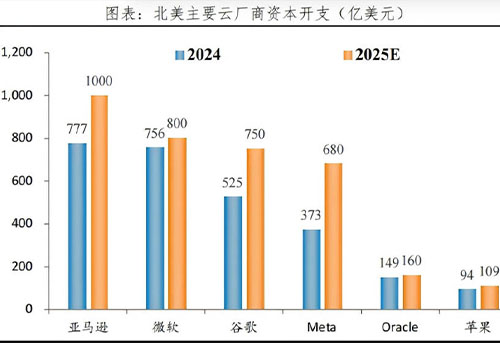
The expansion of the demand side stems from both internal and external dynamics. In overseas markets, the capital expenditures of the four major cloud vendors such as Google and Meta in Q2 2025 will reach .8 billion , year-on-year growth 64% , Google even raised its full-year expenses to billion , a year-on-year growth rate of approximately 43% , focusing on the construction of AIDC; power grids in the United States, the Middle East, Southeast Asia and other places are weak, and AIDC supporting energy storage has become a rigid demand to ensure stable operation, and large projects of 1-2GWh level have already appeared. In the domestic market, ByteDance’s AI capital expenditure in 2025 is expected to exceed 150 billion Yuan , the year-on-year growth rate of computing power investment of the three major operators all exceeded 20% , the inference side demand has become a new growth engine. In August, an energy storage company listed in Hong Kong reported a significant year-on-year increase in AIDC business revenue in its semi-annual report. 113.1% , the revenue share increased to 47.2% , further marking the track’s evolution from “ Technology pilot "Full progress" Large-scale commercial use " stage, leading companies have explored clear profit paths.
Policy escort
The rapid development of the market cannot be separated from the precise guidance of policies. Since 2025, my country has intensively introduced a number of policies to build a multi-level support system for the AIDC+ energy storage industry. The "Action Plan for the High-Quality Development of New Energy Storage Manufacturing" released in February included AIDC distribution and storage into the national strategy for the first time, clearly stating that " Promote new energy storage configurations for intelligent computing centers ", establishing its important position from the top-level design; in May, the "Green Power Direct Connection Development Notice" encouraged AIDC to adopt " Green electricity + energy storage "model, lowering the threshold for clean energy use; the July "Green Data Center Recommendation Notice" mentioned that the utilization level of renewable energy and energy storage is one of the evaluation indicators, with a total score of 10 points, which directly improves the economics of distribution and storage.
Successful Case: SenseTime Lingang Intelligent Computing Center Project
SenseTime Lingang Intelligent Computing Center is an important benchmark for digital energy integration in Shanghai's Lingang area. It is also the country's first 5A-level intelligent computing center computing power performance certification project. It adopts a distributed cluster architecture design, and the system adopts " Hardware cluster - software scheduling - intelligent collaboration "The three-tier architecture achieves efficient release and accurate matching of computing resources. The co-founder of SenseTime and president of the large device business group revealed that as of August this year, the total computing power of SenseTime's large devices has steadily increased to 25000P (PetaFlops, 1P is equivalent to 1000 trillion calculations per second), optimized through computing and power collaboration technology, energy utilization efficiency (PUE) Dropped from 1.74 to below 1.3 .
At the beginning of its establishment, the project put forward extremely high requirements for the integration, stability and adaptability of energy storage equipment. Based on the characteristics of the project, InBev Intelligent Storage Tailor-made 5MW booster integrated cabin solution , with a highly integrated design Breaking the limitations of traditional equipment layout , becoming the core guarantee for the smooth advancement of the project.

The one-stop integrated cabin not only greatly saves the installation space and construction period at the project site, but also reduces line losses between equipment and improves the overall energy conversion efficiency. The total scale of Shangtang Lingang project 18MW / 36MW h energy storage demand, this solution effectively simplifies the system debugging process, ensuring that the energy storage power station can quickly connect to the 10kV energy storage boost station and seamlessly connect with the computing center energy system. At the same time, due to the special geographical environment of Shanghai's Lingang area near the sea, it poses severe challenges to the anti-corrosion performance of outdoor energy storage equipment. InBev Intelligent Storage is integrated into the core equipment design C5 anti-corrosion grade standard , building a reliable barrier for the long-term operation of the equipment.
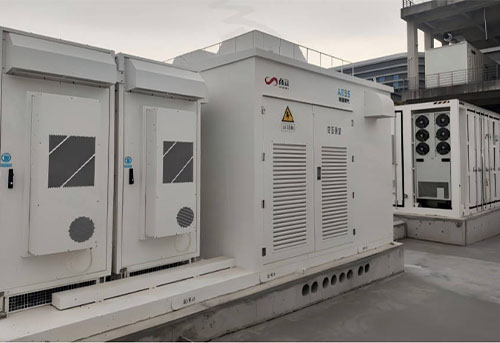
In addition, its independently developed PCS control system supports operation in a wide voltage range, Can adapt to power needs under different working conditions , the intelligent monitoring system built into the equipment can collect operating data in real time and link with SenseTime's large energy model to provide " Count as electricity , Electricity moves with calculation "The two-way closed loop provides data support.
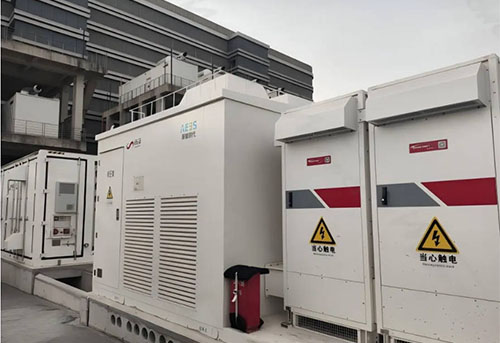
From customized solutions for Shangtang Port Project to C5 From polishing the details of anti-corrosion design to technological collaboration with digital energy integration, InBev Intelligent Storage uses " hardcore "Technical strength has made it a key player in the AIDC energy storage field. In the wave of rapid development of the industry, InBev Intelligent Storage is based on project practice, constantly exploring the boundaries of technology, and creating solutions for more AIDC safe , Efficient , reliable Energy storage solutions to help " Green computing power "The goal has been achieved and we are leading the new AIDC energy storage track.
exhibition Hope: Toward the ultimate form of “computing power is energy storage”
In the long term, the certainty of growth in the AIDC energy storage track is beyond doubt. Aijian Securities predicts that AIDC energy storage will become the third growth pole after household storage and large-scale storage, and the compound growth rate from 2024 to 2030 is expected to exceed 80% , accounting for 2030 global energy storage market share will reach 25% . As the industrialization process of sodium power accelerates and VPP polymerization technology matures, the integration of AIDC and energy storage will be further deepened, eventually realizing " Computing power is energy storage "The ultimate form - that is, AIDC is no longer just a consumer of electricity, but can also become a power grid through flexible dispatch." Virtual energy storage power station ”, becoming the core hub connecting the dual trillion-dollar market of AI and energy, injecting new momentum into global energy transformation and technological innovation.
Video number search|InBev Electric IN-POWER
Douyin account: 94939186384
INPOWER
About us:
Beijing Yingbo Electric Co., Ltd. was established in March 2004. It is a high-tech enterprise. The company is headquartered in Zhongguancun High-tech Industrial Park, Beijing. It currently has 3 R&D centers, 3 production bases and 25 offices/sales outlets nationwide, and has built a nationwide marketing and service network covering power quality and energy storage systems. It integrates two major business segments. Among them, the energy storage system mainly includes a full range of product matrices such as 35~450kW string energy storage converters, 125kW hybrid inverter modules, 500~3450kW centralized energy storage converters, and 500kW~10MW boost integrated cabins. It also provides parallel and off-grid switching cabinets, and EPC general contracting services for energy storage projects. The company has obtained 320+ independent intellectual property rights (including acceptance), 50+ invention patents (including acceptance), and 100+ software copyrights (including acceptance). It has experience in R&D, system integration and power system application of power electronics platforms and new energy products. The company entered the energy storage industry in 2014 and has successively won honors from third-party authoritative organizations such as "Top Ten Domestic Medium and High Power PCS Shipments in 2020", "Best PCS Supplier in China's Energy Storage Industry in 2022", "Top Ten Global Medium and High Power PCS Shipments by Chinese Enterprises in 2022", "Top Ten Domestic PCS Shipments in 2023", and "Top Ten Global PCS Shipments in 2024". To learn more about InBev Electric, you are welcome to visit the official website of InBev Electric: www.in-power.net


