Long Duration Energy Storage (LDES) It is becoming the core infrastructure in the global energy transformation process. As the penetration rate of wind power and photovoltaics in the European market continues to increase, the value evaluation dimension of energy storage systems has shifted from installed capacity scale to full life cycle efficiency performance, dispatchability and economic returns.
All-vanadium flow battery (VRFB) by virtue of Long term discharge capability , Intrinsic safety characteristics and low capacity attenuation rate , gaining widespread attention in long-term energy storage scenarios of more than 4 hours. However, project practice shows that Battery technology selection is only the starting point for system engineering , the adaptability of the power conversion architecture is the key variable that determines the final benefits of the project.
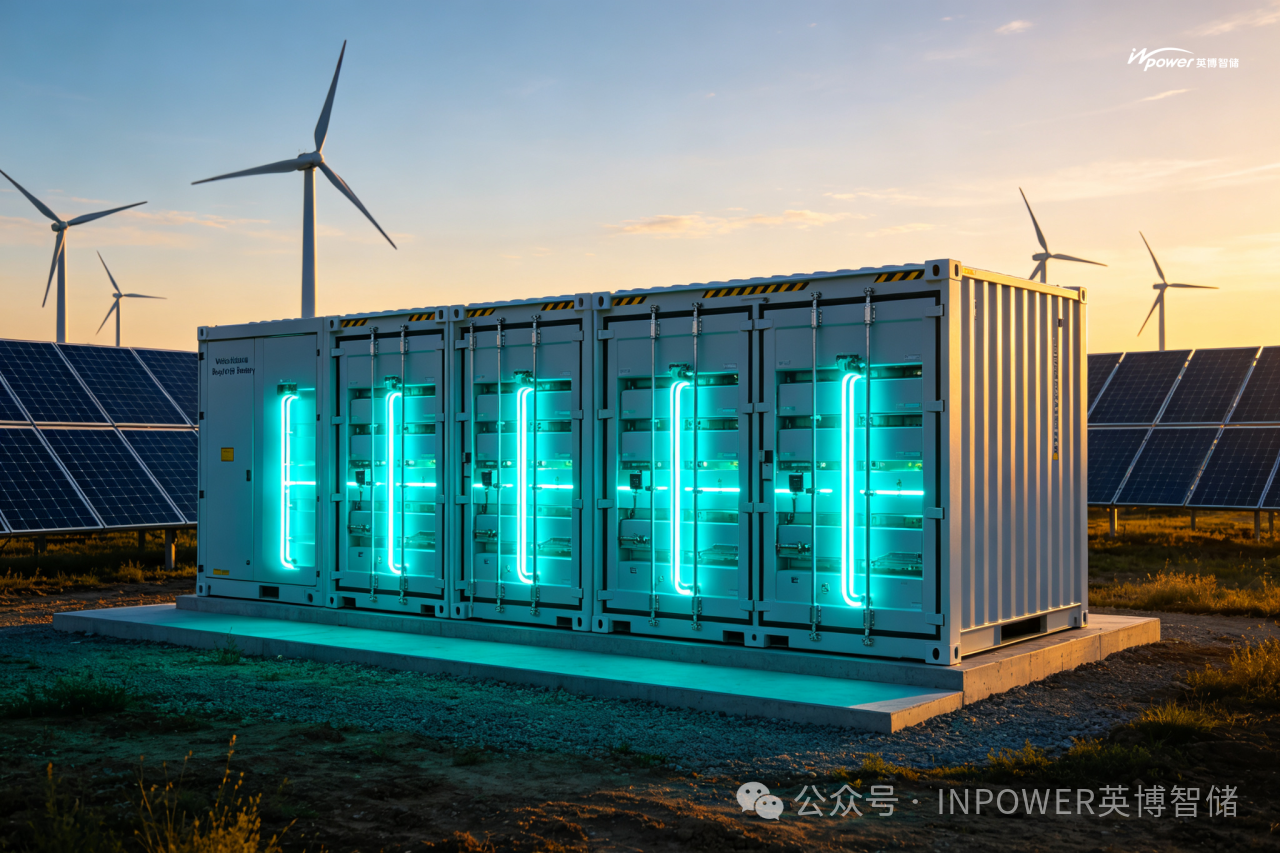
Technical positioning and market drivers of all-vanadium redox flow batteries
All-vanadium flow batteries achieve energy storage through the redox reaction of vanadium ions in the positive and negative electrolytes. Decoupling power and capacity The design gives it linear expansion advantages in long-term discharge scenarios. At the same time, Aqueous electrolyte of Intrinsically non-flammable properties Already With a cycle life of more than 20 years, it has differentiated competitiveness in terms of safety and full life cycle cost.
In the European market, the continued increase in the proportion of renewable energy targets and the growing demand for flexibility in the power market have jointly promoted the expansion of long-term energy storage installed capacity. However, as the project moves from the demonstration phase to Large-scale commercial deployment , the technical adaptation problem at the system integration level has increasingly become the core factor restricting project economics.
System-Level Bottleneck: Adaptability Mismatch of Power Conversion Architecture
Many current flow energy storage projects still use energy storage converters developed around the voltage characteristics of lithium batteries ( PCS ) and system architecture, this technology path is very important in the development of flow batteries. Low voltage and high current conditions There are two fundamental mismatches.
Conversion efficiency and power attenuation under low voltage conditions The DC operating voltage range of the all-vanadium redox flow battery stack is significantly lower than that of the lithium battery system. When the PCS is not optimized for this low-voltage operating condition, the power device will deviate from the optimal efficiency operating point, resulting in Conversion efficiency decreases .
More importantly, as the discharge process progresses, the stack voltage continues to decline, and the output power under the traditional architecture will decrease accordingly. The project investment model is based on Discharge in 4 hours at full power The calculation of income may not be realized in actual operation due to the compression of effective discharge time, which will directly affect Internal Rate of Return (IRR) and Payback Period . Zero-voltage start-up and grid-connected delivery delays After the flow battery is deeply discharged, the stack voltage can be close to 0V . Unlike lithium battery systems, the battery itself cannot self-start for the PCS at this time. Additional configuration required on site Auxiliary power supply , add auxiliary wiring and conduct multiple rounds of debugging, resulting in Grid connection cycle extension .
For EPC and project owners, Delays in grid connection mean that the revenue period will be delayed and project delivery risks will increase. . The above problems appear to be mismatches in electrical parameters, but are actually business risks caused by lack of system architecture design.
System-level solutions from InBev Intelligent Storage
InBev believes that power conversion systems should be designed around application scenarios and battery technology characteristics, rather than forcing different technical routes into a unified architecture. For all-vanadium redox flow batteries Low voltage and high current characteristics , launched by InBev Intelligent Storage 70V low voltage starting bidirectional DC/DC architecture .
The core configuration of the system includes:
・Four 65kW silicon carbide (SiC) bidirectional DC/DC modules operate in parallel to achieve power expansion
・2 sets of 125kW silicon carbide (SiC) PCS to ensure efficient power conversion
・Isolation transformer to meet grid access requirements
・DC side operating voltage range 70V–670V , fully adapted to the working conditions of all-vanadium redox stacks
This architecture solves the problem of flow batteries from the system level Low voltage start , Boost conversion and efficient grid connection full link requirements.
Three dimensions of value release
Improved grid-connected delivery certainty
The 70V low-voltage start-up capability allows the system to start charging directly from a deep discharge state without the need for additional auxiliary power supplies for PCS wake-up. The simplification of the debugging process effectively reduces on-site complexity and helps the project be implemented as planned. Commercial Operations (COD) , ensuring the certainty of delivery cycle and revenue starting time.
Discharge power stability guarantee The DC/DC stage maintains a stable DC bus voltage during the entire discharge process. Even if the stack voltage decreases with the depth of discharge, the system output power will not attenuate. in the investment model Full power discharge curve It can be reproduced in actual operation, and dispatchability and revenue calculation form a closed loop.
For asset owners, the value of an energy storage asset depends on the amount of electricity that can actually be delivered during demand periods. Stability of power output It directly determines the achievability of revenue models such as capacity market, ancillary services and peak-valley arbitrage.
Conversion efficiency and life cycle cost optimization Silicon carbide (SiC) power devices It has lower switching losses and higher operating frequency, and combined with the parallel DC/DC architecture, it can maintain efficient conversion under all operating conditions.
In the entire life cycle of energy assets, conversion loss is not a simple engineering indicator - it directly affects the effective storage capacity, dispatchable power and arbitrage space of renewable energy. The accumulated power savings from efficiency improvements can be converted into considerable economic benefits during the project operation cycle.
Application significance to the European market
Europe's energy transition is driving the power system to evolve towards a high proportion of renewable energy, high electrification rate and multi-flexibility resource synergy. The revenue models and grid service requirements that energy storage assets need to respond to are becoming increasingly diverse, and the importance of system-level performance continues to rise.
For developers, EPCs and asset owners, the core issues in project decision-making should not be limited to "which battery technology to choose", but should rise to:
"What kind of complete energy system architecture can provide specific application scenarios? Deliverability , Reliability , Flexibility The optimal combination with long-term value? "
Battery technology, PCS architecture, thermal management, control strategy, grid integration and grid-connected debugging, all together form the answer to system performance.
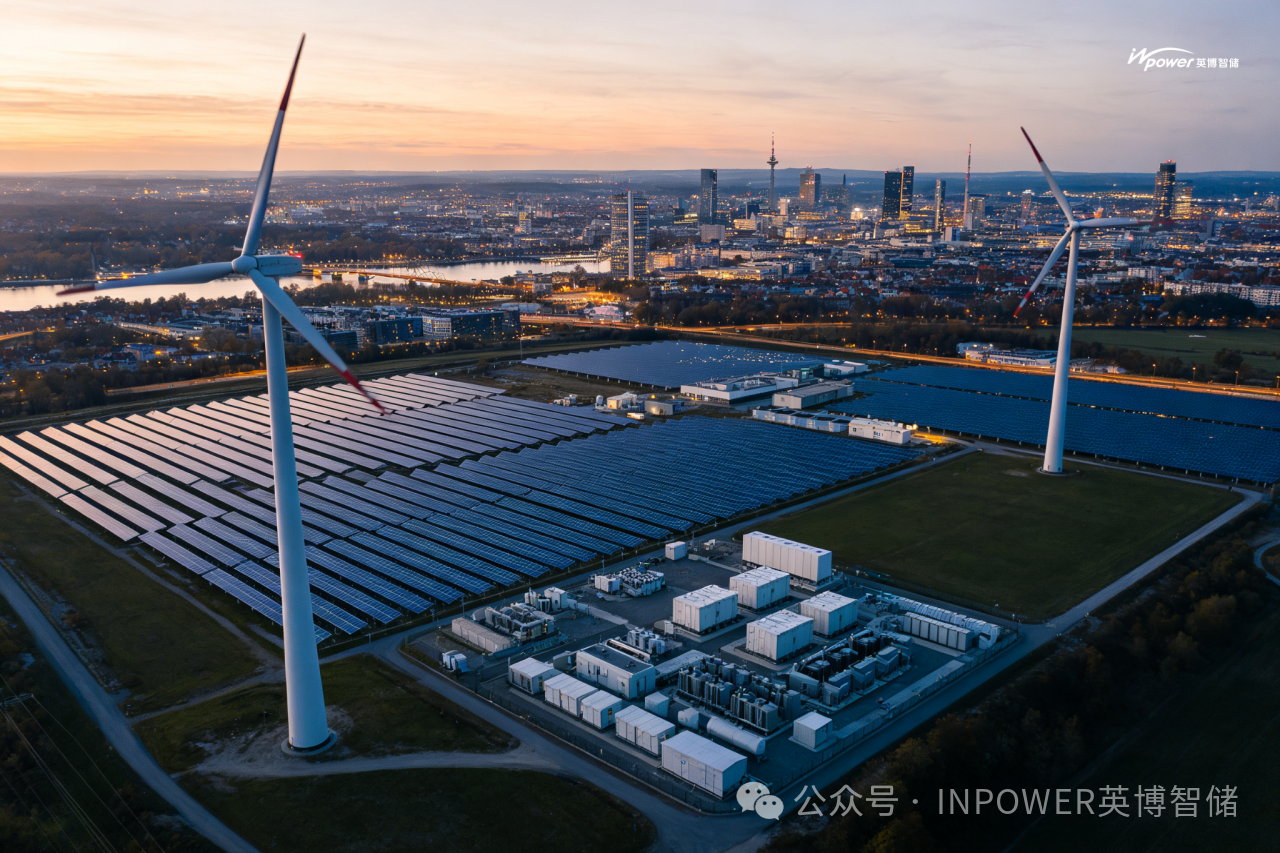
There is no one-size-fits-all battery technology or system architecture for the energy transition. The real value opportunity lies in: Combining adapted battery technology with purpose-designed power conversion architecture , Maximizing value per megawatt of investment .
As a global professional Energy storage converter As a smart energy solution provider, InBev Intelligent Storage is committed to focusing on power conversion and comprehensive energy solutions, focusing on long-term energy storage, renewable energy grid connection, microgrids, industrial and commercial energy management and grid support, building a system architecture adapted to real working conditions, and promoting the evolution of renewable energy systems to higher efficiency and higher reliability.


